
Know the tree.
Care, shade, soil, and a watchful eye. Growing cacao is a craft of its own.
Page 2: The Sweet AdventureFive stops. One delicious journey. Come explore Candy Kartel.
Start the Sweet Adventure →
Take the chocolate quiz.
Five questions. Two minutes.
 PeruvianUnboxing
Before the chocolate.
Before the tube.
There’s a farmer.
Our cocoa search starts in Central and South America. The cacao story connects farmers and makers around the world.
 The truth is
Opening the community ledger…
Chocolate starts long before a chocolate maker ever touches a bean. It starts with people who know the trees, the seasons, and the moment a pod is ready.
Care, shade, soil, and a watchful eye. Growing cacao is a craft of its own.
Harvesting, fermenting, and drying help set the character of the chocolate to come.
The origin, the people, and the work deserve a place alongside the finished chocolate.
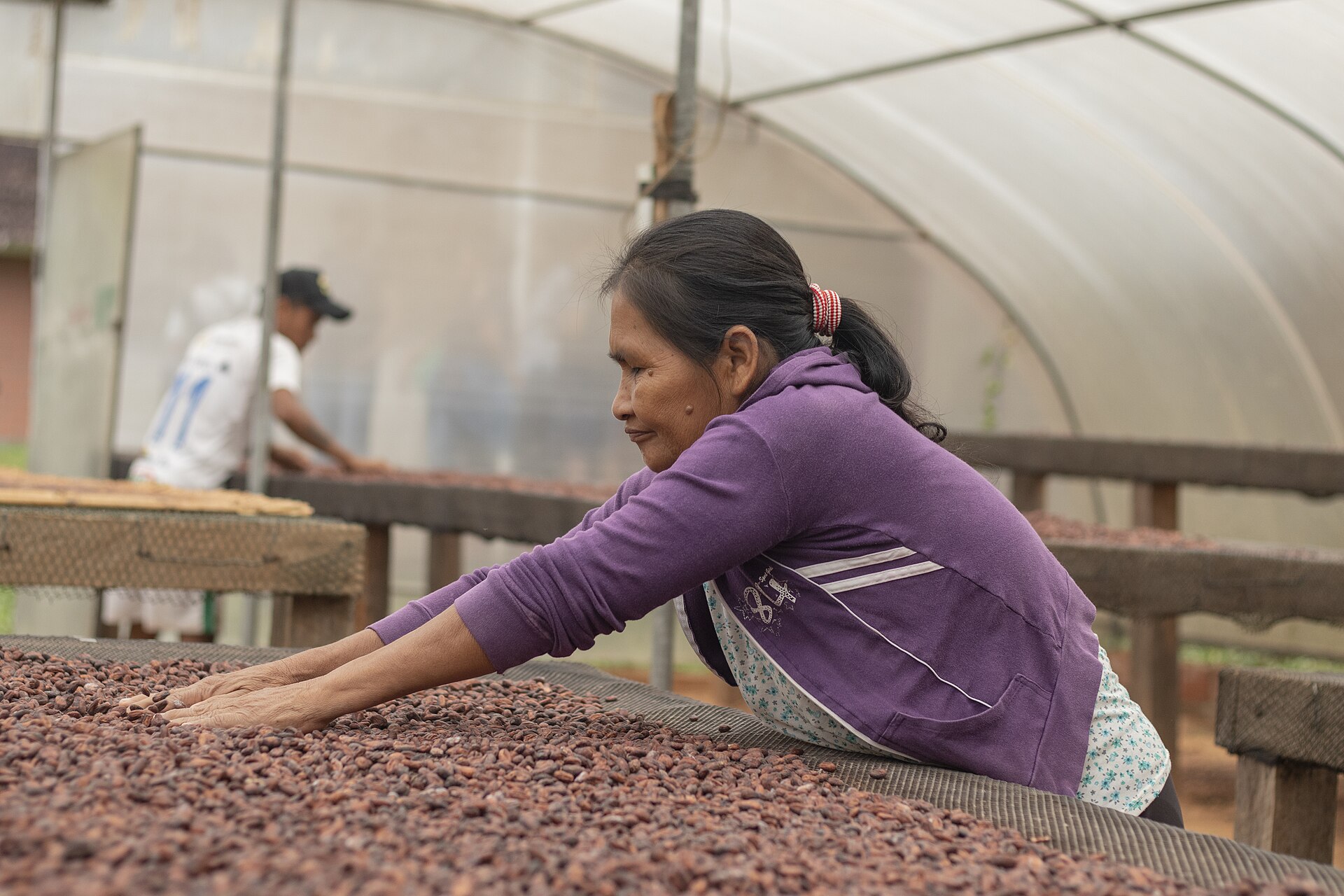
Photo: Das Morton / Wikimedia Commons · CC BY-SA 4.0 · Resized; cropped to fit the frame.
Great chocolate begins
with people.
We’re building our sourcing relationships across Central and South America. Named grower stories and batch origins will follow as those relationships are verified.
Cacao grows in warm, humid tropical regions across the Americas, Africa and Asia. Farmers care for the trees, then harvest, ferment and dry the beans—work that helps shape the chocolate’s flavor.

Many origins. Many expressions. Selected cocoa-growing origins and illustrative flavor notes. Variety, growing conditions and the work after harvest give each batch its own character.
Open the full-size mapThe Americas: Mexico, Dominican Republic, Costa Rica, Venezuela, Ecuador, Peru and Brazil.
Africa: Côte d’Ivoire (Ivory Coast), Ghana, Tanzania and Madagascar.
Asia: India, Vietnam and the Philippines.
Pacific islands: Hawaii.
Flavor key: Fudgy, earthy, floral, roasty, nutty, tangy, fruity and spicy.
Explore the growing story: ICCO on growing cocoa ICCO on origin and flavor
For our initial cocoa batches, Candy Kartel’s sourcing search is focused on Central and South America. We’re following the flavor—and asking where it comes from and who helped create it.
From Panama to Guatemala, our search follows growers, cooperatives, and processors who can connect a cocoa ingredient to its origin.
Peru, Ecuador, and Colombia are part of the hunt for expressive cocoa—and the farmers and makers whose work gives it character.
A place is more than a label. We’ll share specific farm and supplier origins when we can back them up.
Cacao becomes cocoa through a series of careful steps. Follow the journey, then see how cocoa powder becomes a pecan chocolate spread.
Choose a chapter to follow the transformation.
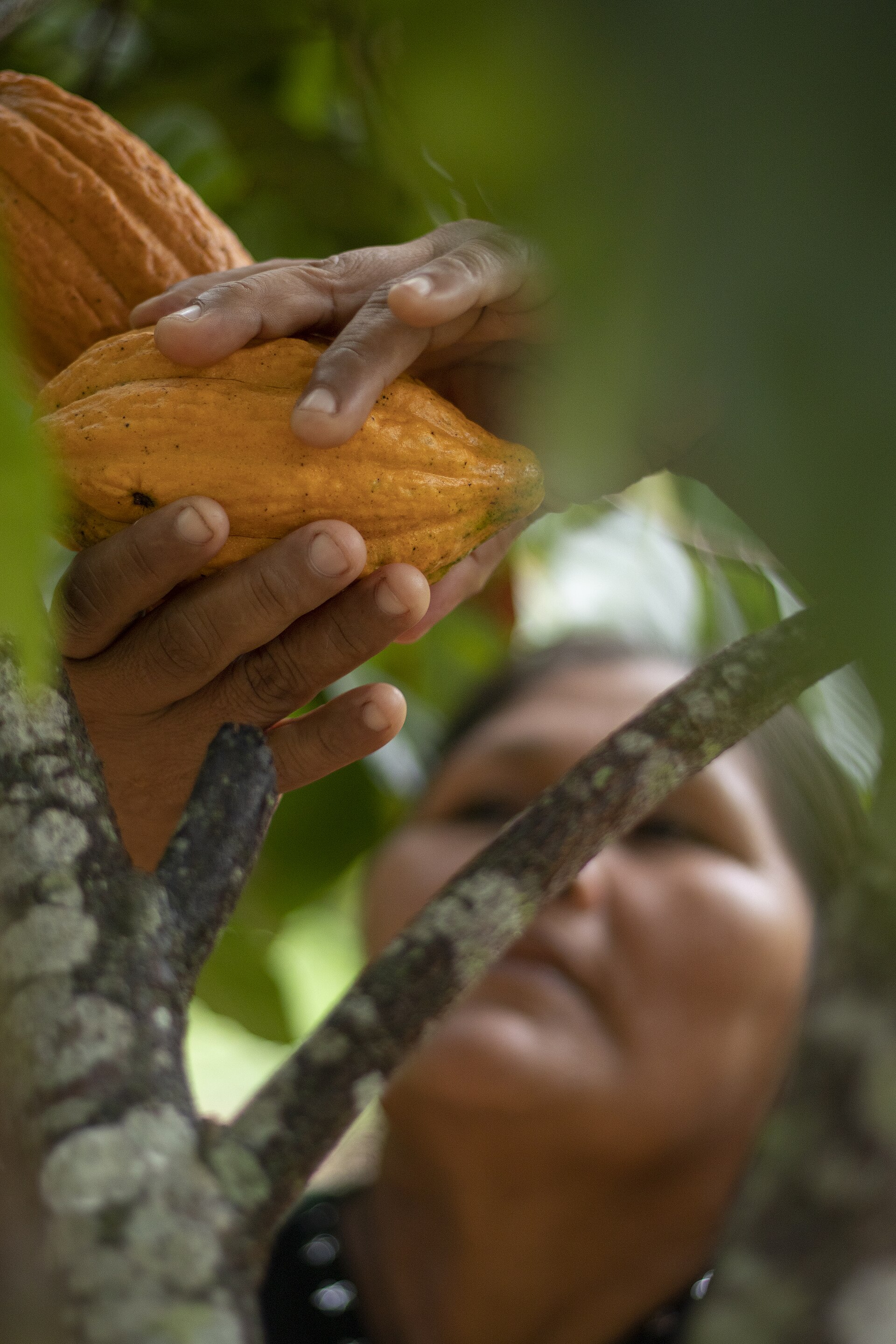
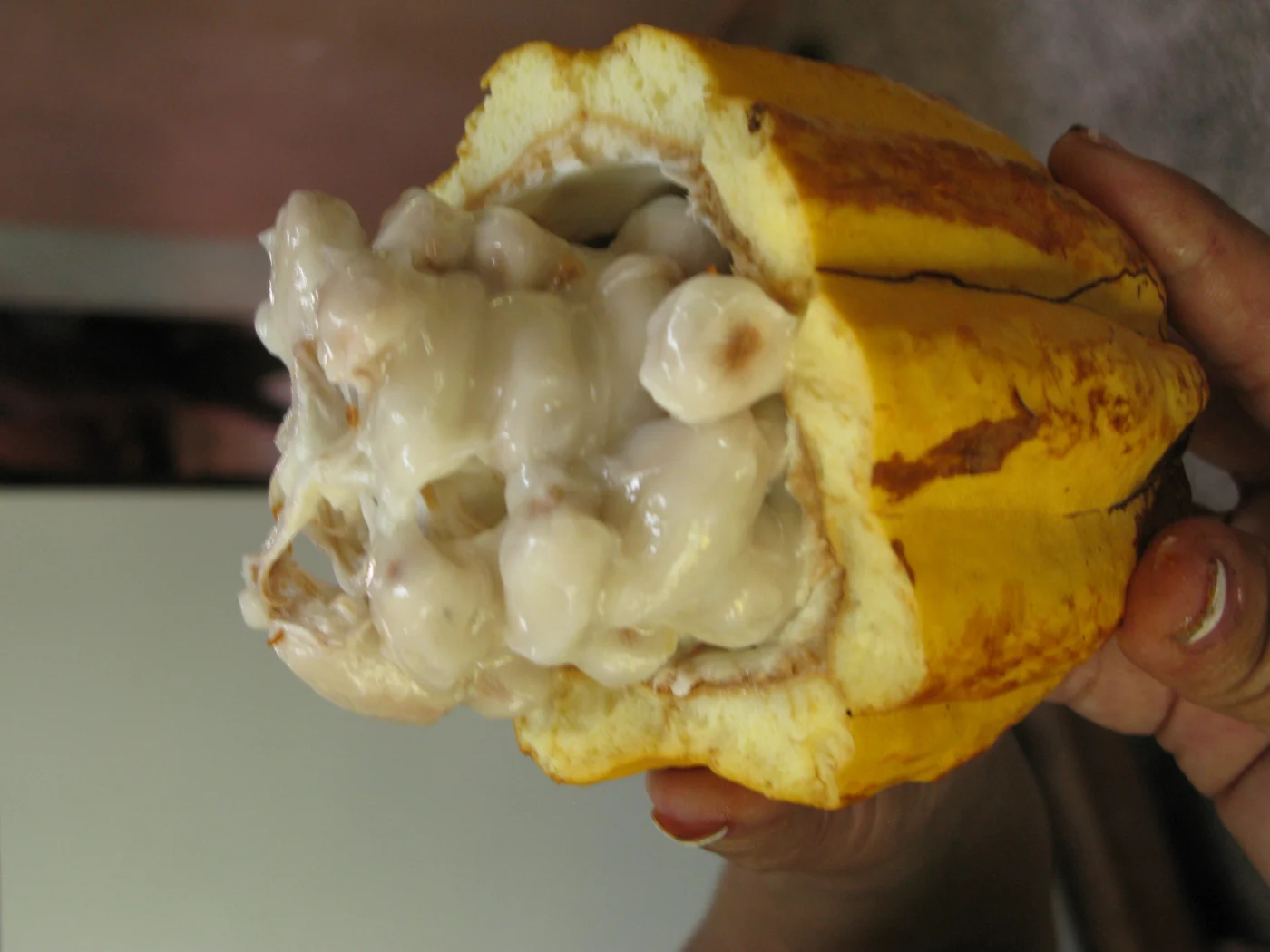
Farmers harvest ripe cacao pods and open them to reveal seeds wrapped in a sweet, white pulp. Those seeds are the beginning of chocolate.
Cacao pods → pulp-covered seedsThe seeds and pulp are fermented. Microbial activity and heat trigger changes inside the beans that help develop chocolate flavor during roasting.
Fresh seeds → fermented beansThe fermented beans are dried to reduce moisture and prepare them for storage and transport. Careful drying protects the work already done on the farm.
Fermented beans → dried cocoa beansRoasting develops chocolate aromas. Cracking and winnowing separate the shells from the cocoa nibs—the part used to make chocolate and cocoa ingredients. Processors may winnow before roasting.
Cocoa beans → roasted cocoa nibsGrinding nibs makes cocoa liquor: a paste of cocoa solids and cocoa butter, with no alcohol. For cocoa powder, the liquor is pressed to remove some butter. The remaining cocoa cake is milled into powder.
Nibs → cocoa liquor → cocoa cake → powderOur spread development brings cocoa powder together with pecans and cane sugar. Blending and refining aim for a smooth chocolate texture that squeezes from a 2 oz aluminum tube.
Cocoa + pecans + cane sugar → chocolate spreadExplore the craft: ICCO on harvest and post-harvest ICCO on processing cocoa

Curious minds. Chocolate-covered discoveries.
Tiny microbes. Melting crystals. Big chocolate energy.
Come explore the hidden world inside your favorite treat. Ask questions, push buttons, and follow the flavor.
01 / Fermentation
Before roasting, farmers give pulp-covered cocoa beans time to ferment. Microbes in the pulp help set up the chemistry of chocolate flavor.
Yeasts use sugars in the pulp and make alcohol and carbon dioxide. They also help break down the pulp around the beans.
Lactic acid bacteria and acetic acid bacteria also take part. With oxygen, acetic acid bacteria turn alcohol into acid and release heat. Farmers turn the beans to let more air in.
Heat and acids trigger changes inside the seed. Enzymes break down materials such as proteins, creating building blocks that help roasting develop chocolate aromas.
The microbes overlap in real life. These drawings are friendly characters, not microscope photographs.
Explore the fermentation research ↗Fermentation prepares the ingredients for flavor. Drying removes moisture; roasting develops familiar chocolate aromas. It takes both the farm and the maker.
ICCO: from beans to chocolate ↗02 / Cocoa butter
Cocoa butter is the natural fat inside cocoa beans. Despite the name, it isn’t dairy butter.
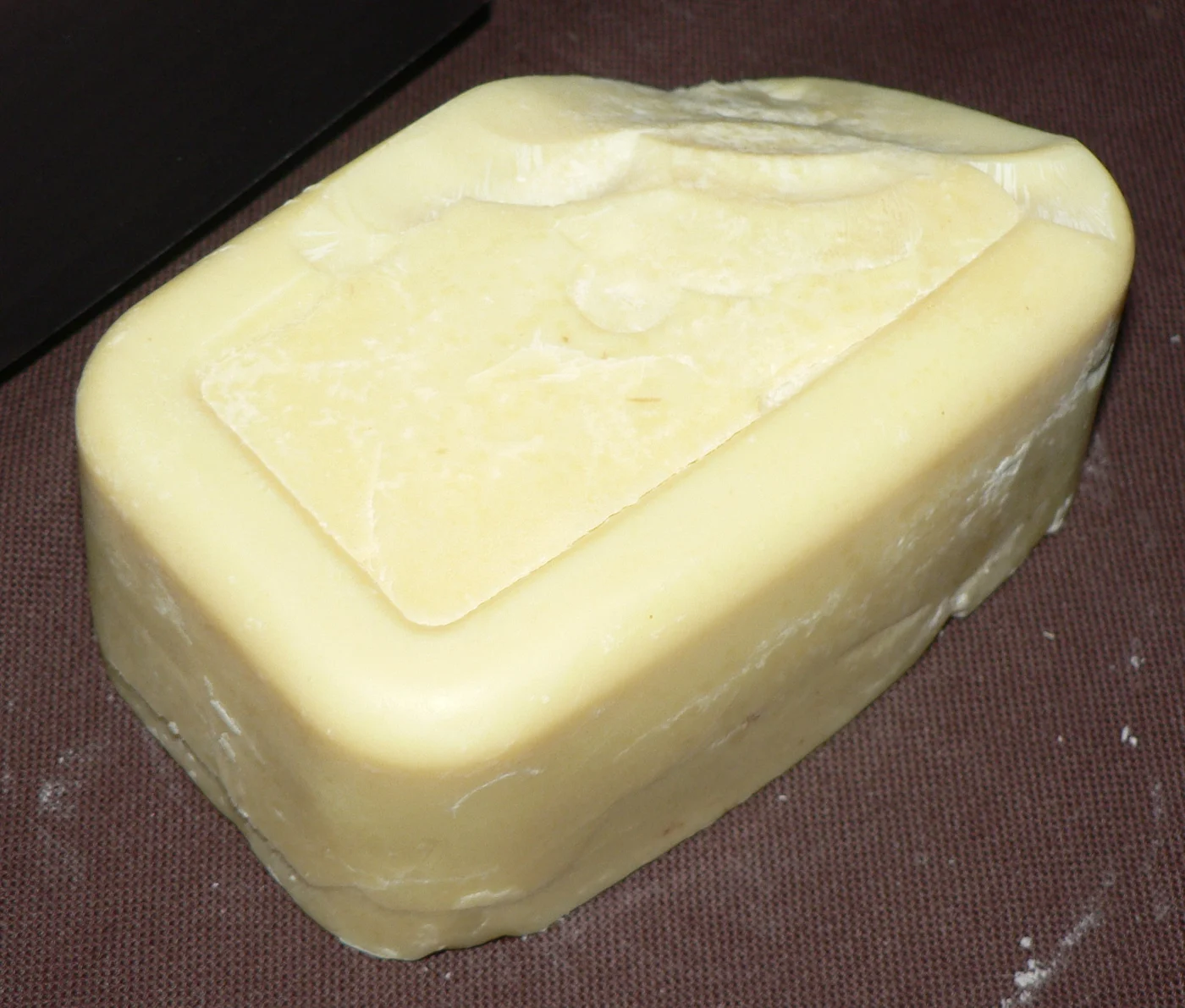
Cocoa liquor is ground cocoa—not an alcoholic drink.
Press it, and get two ingredientsSolid fat crystals can join into a network. That structure helps cocoa butter—and chocolate—hold a shape.
As it warms, cocoa butter’s balance of solid and liquid fat changes. The network weakens, and the fat softens.
Once the fat is fully melted, the network is gone. Chocolate’s sugar and cocoa particles are still there, suspended in the melted fat.
A simplified illustration, not a thermometer. Recipe, crystal form, and cooling history affect how chocolate melts.
Same fat. Different ways to pack its molecules. Cocoa butter is commonly described as having six crystal forms. Their arrangements change how the fat behaves. Tempering helps chocolate makers guide the crystal network in a bar.
Read the cocoa butter crystal study ↗Our goal for Conspiracy Chocolate is a smooth, squeezable pecan chocolate spread. Cocoa butter, pecan oil, particles, and temperature all play a part. A chocolate bar and a chocolate spread have different texture goals!
03 / Chocolate chemistry
Choose a chocolate and investigate its typical ingredients. The brown cocoa solids and the pale cocoa butter do different jobs.
Cocoa mass contains brown cocoa solids and cocoa butter. Dark chocolate usually has more cocoa character than milk chocolate.
Milk chocolate combines cocoa ingredients with milk ingredients and sugar. Changing those proportions changes the flavor and color.
White chocolate contains cacao-derived cocoa butter, but no brown, non-fat cocoa solids. That’s why it isn’t brown.
These are typical examples. Actual recipes and extra ingredients vary.
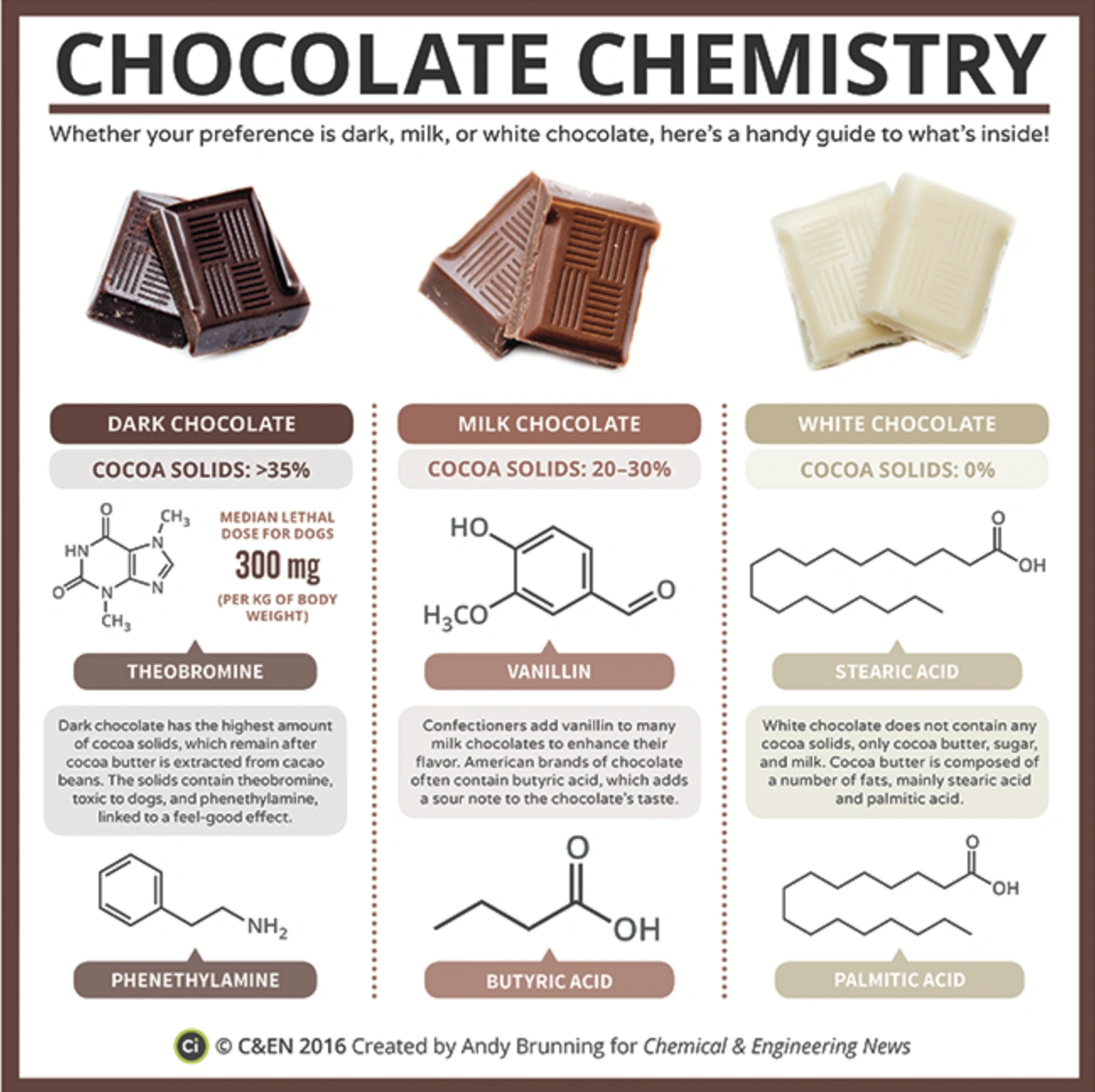
Reading tip: “0% cocoa solids” in the white chocolate column means no non-fat cocoa solids. Its cocoa butter still comes from cacao. The percentages in this 2016 reference aren’t a rule for every chocolate recipe.
04 / The texture detective
Chocolate isn’t just one liquid. Tiny cocoa and sugar particles sit in its fat. Refining breaks larger particles down, helping reduce that gritty feeling.
Smaller particles also create more surface to coat with fat. So “finer” doesn’t automatically mean “runnier.” The recipe matters.
Explore particle size and chocolate flow ↗Larger particles can feel gritty on your tongue.
A magnified illustration—not a measurement.Your turn / think like a scientist
Try these three tiny challenges. A wrong guess is just a chance to discover something.
Three discoveries waiting for you.
For the extra-curious
Keep asking questions. These are the science and craft sources behind the lab.
Chocolate, straight from the tube.
Toast, fruit, waffles. Give them a plot twist.
Road trip, desk drawer, or wherever the day goes.
Technically possible. Emotionally complicated.
Follow the cacao story and get in on Candy Kartel’s first taste.
Join the first-taste listKeep squeezing.Chef Tony “Maddog” Maggert
From a roadside encounter with Colin Powell to the kitchen. Meet the chef behind Candy Kartel.


In his own words
Military service, life in the kitchen, and the story behind the Colin Powell encounter.
Explore episode 107A conversation about the journey from military service to culinary school.
Listen to the interviewChef Maddog joins the show to talk about food and his path into cooking.
Listen to the interviewThe roadside moment that connected two veterans and traveled around the world.
Explore the interview